
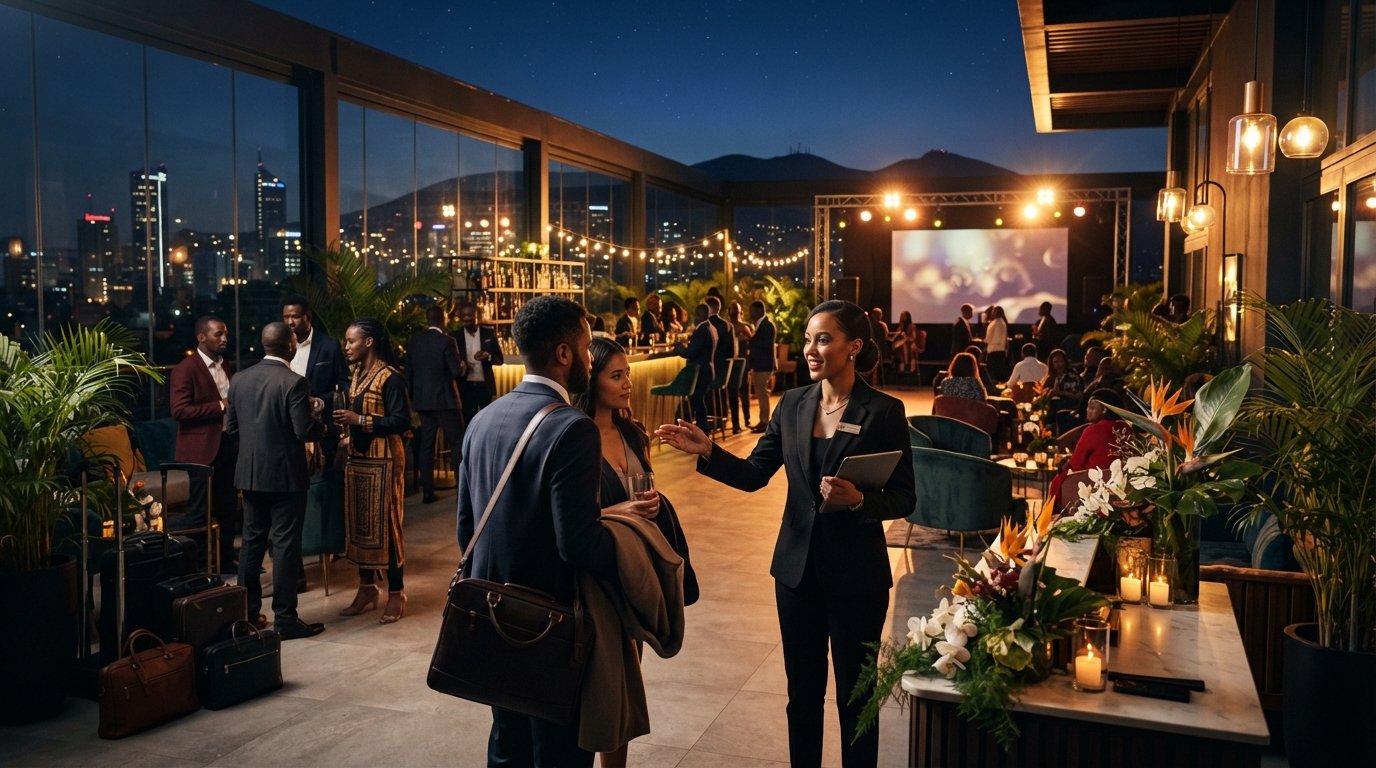
A polished corporate event is built as much behind the scenes as in the room. A corporate event planner in Kenya coordinates the event concept, programme, venue logistics and guest experience, while aligning each detail with the organisation’s brand and objectives. For guests travelling in, planning can also account for transport and accommodation logistics.
It’s natural to focus first on the venue, schedule and visible details. Yet a successful gathering depends on how those elements work together, from the first invitation to the final departure. Thoughtful coordination lets your team focus on the event’s purpose while guests feel welcomed and well guided.
This guide explains what corporate event planning in Kenya can cover, how the process takes shape and which details influence a project’s scope and cost. You’ll also learn how brand alignment, guest travel and accommodation fit into the plan, and when an event-planning team can make the experience more cohesive and manageable.
Key Takeaways
- Compare event-planning listings by the kind of coordination and experience your gathering needs, not by appearance alone.
- Bring the event purpose, programme, venue details and on-site responsibilities together in one clear planning process.
- Translate your brand into considered choices across the setting, guest journey and event atmosphere.
- Plan guest arrivals, transport and accommodation as connected parts of the event experience, especially when attendees are travelling.
- Chic Soirees can help shape and coordinate corporate events when you want creative direction and practical planning to work in harmony.
Event management company listings in Kenya
Company listings are a starting point, not a complete measure of fit. Compare each firm’s planning scope, coordination approach and experience with your event format.
As of October 2026, listings include 24 event management companies in Kenya. Market figures show that 10% of firms employ 50 or more people, while the median client rating is 4.9. These indicators provide context, but your brief should shape the shortlist. A larger team may suit a complex conference; a smaller gathering may call for close, tailored coordination.
Kenya’s corporate event landscape also connects with the wider Africa events industry. The Africa Events Summit 2026 was held in Nairobi on 10-11 September 2026, highlighting Nairobi’s place in the events calendar. Use listings to identify firms whose portfolios reflect your format, whether you’re planning a conference, leadership meeting or company celebration in Nairobi.
Corporate Event Planning and Management
Corporate planning brings the event vision, programme, venue arrangements and guest experience into one coordinated plan. Look for clear responsibilities during preparation and on event day, then consider how the planner translates a business objective into a practical run sheet. A Nairobi product launch, for example, needs different programme pacing and brand moments from an internal team meeting.
Vendor Sourcing and Management
Vendor coordination can include identifying suitable suppliers, aligning deliverables and managing timings across the event plan. Clarify how supplier roles, approvals, payment milestones and event-day contacts will be documented, and who handles changes if schedules shift. Before hiring, establish which planning and on-site tasks are included, how vendors are selected, and who manages communication and contingency arrangements.
End-to-End Event Management
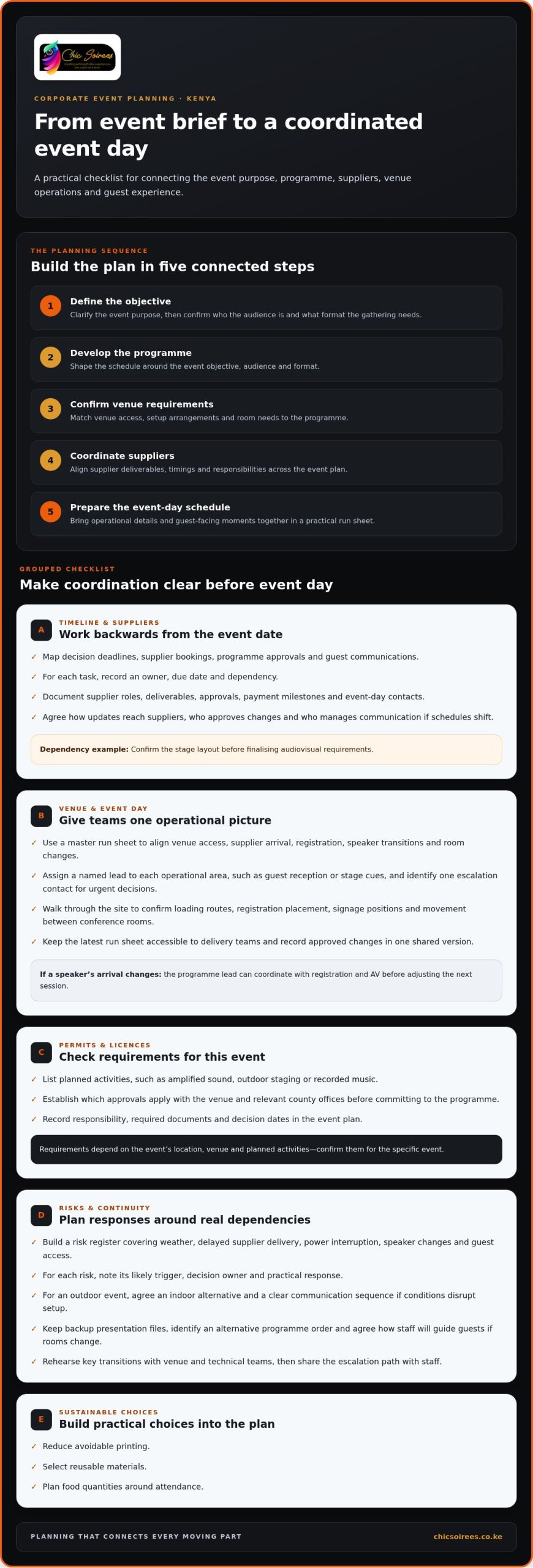
End-to-end management connects the initial brief to the event’s operational details. A practical sequence is to define the objective, confirm the audience and format, develop the programme, coordinate suppliers and prepare an event-day schedule. Sustainable choices can also be built into the plan: reduce avoidable printing, select reusable materials and plan food quantities around attendance.
Costs and Venue Selection
Venue, catering and AV costs depend on guest numbers, location, event duration, menu requirements, room setup and technical production. The project scope, supplier needs and venue requirements shape the estimate, which is provided after a quote request. For conferences, consider Nairobi conference centres or hotel meeting rooms with suitable presentation and breakout spaces. Business hotels can suit formal company parties, while garden venues offer an outdoor setting. Compare access, capacity, layout, acoustics and transport options with your programme before choosing.
Event planning process and on-site coordination
A clear process connects the event brief to a practical schedule, supplier responsibilities and guest experience. For conferences, the planning team turns the purpose, programme and venue requirements into coordinated actions.
Event Timelines and Vendor Coordination
Start with the event date, then work backwards through decision deadlines, supplier bookings, programme approvals and guest communications. A shared timeline should name each task owner, due date and dependency, such as confirming the stage layout before finalising audiovisual requirements. Agree how updates reach suppliers and who approves changes. This makes coordination visible before a last-minute adjustment affects several teams.
On-the-Day Logistics and Coordination
On event day, a master run sheet can align venue access, supplier arrival, registration, speaker transitions and room changes. Assign a named lead to each operational area, such as guest reception or stage cues, and provide one escalation contact for urgent decisions. For example, if a speaker’s arrival changes, the programme lead can coordinate with registration and AV before adjusting the next session.
Build the schedule around the venue’s actual access and setup arrangements. A site walk-through helps teams confirm loading routes, registration placement, signage positions and movement between conference rooms. Keep the latest run sheet accessible to the people responsible for delivery, and record approved changes in one shared version.
Permits and Licenses
Permit and licence requirements depend on the event’s location, venue and planned activities. Before committing to the programme, list its components, such as amplified sound, outdoor staging or recorded music, then establish which approvals apply with the venue and relevant county offices. Record responsibility, required documents and decision dates in the event plan. Resolve requirements for the specific event rather than assuming they are the same as for another venue or format.
Risks and Contingency Plans
Build a risk register around the event’s real dependencies: weather for an outdoor function, delayed supplier delivery, power interruption, speaker changes and guest access. For each risk, record its likely trigger, decision owner and practical response. An outdoor conference, for instance, needs a pre-agreed indoor alternative and a clear communication sequence if conditions disrupt the setup.
Plan contingencies that preserve the event’s essential purpose. Keep backup presentation files, identify an alternative programme order and agree how staff will guide guests if rooms change. Rehearse key transitions with venue and technical teams during the briefing, then share the escalation path with staff. For detailed event logistics and coordination, organise responsibilities before event day.
Brand-aligned event experiences
A brand-aligned event makes the organisation’s purpose visible in the guest experience. Begin with a concise brief covering the audience, key message and desired impression. For a Nairobi product launch, that might mean making the new offering the programme’s focal point rather than treating it as one display among many. Use the brief to guide design, content and event-day decisions.
Translate existing brand guidance into practical choices. Select colours, typography, signage and presentation templates that complement the organisation’s identity. A consistent welcome screen, registration desk and stage backdrop can make the event feel unified. Share approved brand assets with designers and production teams, and name one approver to keep revisions aligned.
The programme should express the same message as the setting. For a leadership conference, place the executive address and discussion sessions where attendees can focus, then use breaks for purposeful networking. For a staff celebration, give recognition moments and shared activities more prominence. Each agenda choice should support the event’s objective, not simply fill the schedule.
Guest touchpoints carry the brand beyond the stage. Review the invitation, registration information, arrival instructions, name badges and closing message as one sequence. An invitation that promises a practical learning experience, for example, should lead to clear session descriptions and useful takeaways. Keep wording consistent, and make directions easy to follow for guests unfamiliar with the venue.
Use the physical environment to reinforce the intended atmosphere. Lighting, room layout, music and stage design can support a formal annual meeting or a relaxed networking reception. A restrained palette and uncluttered screens may suit a finance presentation; a product showcase may call for more expressive lighting around the featured item. Match each creative decision to the event’s message and audience.
Execution depends on sharing decisions with the people delivering them. Create a concise creative brief that records the approved visual direction, speaker requirements, signage locations and presentation format. Review a sample screen or stage layout before production begins. This helps teams catch inconsistencies early, such as an outdated logo or a slide template that conflicts with the event’s visual identity.
After the event, compare the experience with the original vision. Review attendee feedback, programme flow and the materials guests encountered, then record practical improvements for the next gathering. Excellence is not only a striking room; it is a coherent experience, from the first invitation to the final interaction, with each detail serving the organisation’s message.
Guest travel and accommodation logistics
Guest travel shapes the experience before attendees enter the venue. For a Nairobi conference, map each guest’s journey from arrival point to hotel, event site and departure. A single itinerary can connect transport windows, check-in guidance, session start times and the contact handling arrival questions. This gives the planning team a clear view of where timing and communication must align.
Begin with a guest travel matrix. Record each attendee’s arrival details, destination, transport arrangement and relevant preferences in one controlled planning document. Group guests by shared arrival windows or accommodation location, then coordinate suitable transfers with the transport partner. Guests arriving around the same time at Jomo Kenyatta International Airport, for example, may be grouped for a coordinated journey to a central Nairobi hotel.
Choose accommodation to suit the event programme, guest needs and journey between the hotel and venue. Compare location, room types, meeting start times, accessibility and check-in arrangements. If the event begins early, a hotel near the venue can simplify morning transfers; if guests have evening commitments, proximity to their planned activities may matter more. Align rooming information with the booking process and communicate arrival instructions clearly.
Give guests practical information before travel. An itinerary can include the venue name, map reference, transport pickup point, event contact and instructions for schedule changes. Keep the wording consistent across invitations and reminders. For someone unfamiliar with Nairobi, clear directions to the correct entrance can prevent confusion, especially when a hotel or conference venue has multiple access points.
Build flexibility into the movement plan. A delayed flight, changed arrival time or traffic disruption can affect transfers and registration, so identify who receives updates and who can adjust the pickup sequence. Keep event contact details accessible to guests and the transport partner. If a transfer changes, send one concise message with the revised pickup location and timing.
Consider guest requirements during planning, not at the final briefing. Invite attendees to share relevant travel or accommodation needs through registration, then pass only necessary details to the people coordinating their arrangements. A mobility request, for example, may affect vehicle selection, hotel room allocation and the route from drop-off to the event entrance. Handle guest information discreetly and limit updates to those who need them.
Before departure, review the itinerary from the guest’s perspective. Can a first-time visitor understand where to go, whom to contact and what happens after arrival? Confirm that hotel, transport and event teams are working from the same schedule. This final coordination turns separate travel arrangements into one considered welcome for every guest.
Corporate event planning
A corporate event should serve a business purpose, not simply fill a room. A corporate event planner in Kenya can help turn a company’s objective into a clear format, considered programme and coordinated guest experience. Start by defining the intended outcome: a product launch may need focused demonstrations, while a staff gathering may centre on recognition and connection.
Set the brief before making major decisions. Record the audience, message, event format, preferred date, venue needs and decision-makers. Then agree how success will be assessed, such as attendee participation, useful conversations or clear understanding of a new initiative. For a leadership conference, the brief might prioritise strategic discussion over a packed schedule of presentations.
Match the scope to the event’s complexity. A meeting with a single presentation differs from a multi-session conference with speakers, transitions and guest arrivals. List the elements requiring coordination, then assign an owner to each decision. This helps the planning team distinguish essential requirements from optional enhancements and gives suppliers a consistent reference.
Budget decisions follow scope. The project’s format, venue, guest requirements, production needs and coordination responsibilities shape the estimate, which is provided after a quote request. A programme requiring several room setups, for instance, has different operational needs from a reception using one space. Resolve priorities early so revisions support the event’s purpose.
Choose a planning partner by examining how the proposed process addresses your brief. Clarify who leads approvals, how decisions are recorded, which tasks sit with your internal team and how changes move through the plan. Review a sample run sheet or planning schedule to see whether responsibilities, supplier touchpoints and event-day decisions are easy to follow.
Keep internal stakeholders aligned through a simple approval sequence. The communications lead can review messages, the programme owner can confirm content, and the authorised decision-maker can approve final commitments. For a product launch, agreeing on the product reveal, spokesperson and key message together prevents the stage programme and event materials from telling different stories.
Close planning with a readiness review. Walk through guest arrival, registration, programme transitions, venue access and the final departure, then identify unresolved decisions. A corporate event is ready for execution when its purpose, responsibilities and guest journey connect. Plan your corporate event with a clear brief and coordinated next steps.
Chic Soirees: Raves & Outdoor Events
Chic Soirees plans corporate events from concept through execution, bringing creative direction and practical coordination together. Turn to the team when your organisation needs a cohesive gathering shaped around its purpose, brand and guest experience. For an outdoor corporate celebration, careful planning connects the event vision with the setting and flow of the day. The team creates considered experiences, whether you’re bringing colleagues together for a company event or planning a vibrant outdoor occasion. Share your event’s purpose, preferred format and key priorities to begin shaping the plan. Contact Chic Soirees to discuss your corporate event.
Shape the Next Gathering with Purpose
Your next step is to turn the event idea into a brief your team can act on. Write down the change you want the gathering to create, the people it should bring together and the feeling you want guests to carry home. That intention gives every later decision a clear reference point.
Choosing a corporate event planner in Kenya can help translate that brief into a carefully coordinated experience. Chic Soirees plans Corporate Events, Social Events and Raves & Outdoor Events, bringing creative planning and practical coordination to gatherings with distinct purposes and atmospheres.
Begin the conversation with your event objective, preferred format and priorities. From there, you can shape an experience that feels considered to your organisation and welcoming to its guests. Contact Chic Soirees about your event and take the next step toward a gathering with purpose, polish and lasting resonance.
Frequently Asked Questions
Need a Quote?
Prepare a short event brief and request a quote from Chic Soirees. Include the event purpose, preferred date, Nairobi venue or location, expected guest profile and planning support you need. Note priorities such as a product reveal or staff celebration. These details help define the project scope and clarify which decisions need attention first. The proposed cost depends on the event’s requirements and is provided after a quote request.
What services do corporate event planners in Kenya offer?
Corporate event planning can include concept development, programme design, venue coordination, supplier management, guest communications and event-day oversight. The exact scope depends on the gathering. A Nairobi product launch, for example, may need a focused presentation sequence and brand-led guest experience, while a staff celebration may centre on recognition and entertainment. Chic Soirees plans Corporate Events from concept through execution, alongside event logistics and coordination.
How much do corporate event planners charge in Kenya?
The fee depends on the project scope and is provided after a quote request. Key cost factors include the event format, venue requirements, guest arrangements, production needs and level of planning or on-site coordination. A single-room meeting and a multi-session conference require different resources and responsibilities. Set your priorities before requesting a proposal, then ensure its scope clearly reflects the tasks your organisation expects the planner to handle.
Which corporate event planning companies operate in Nairobi and other Kenyan cities?
Chic Soirees plans corporate events in Kenya, with Nairobi as a key local planning market. Choose an event partner whose work matches your intended location and format, since a Nairobi conference and an outdoor gathering elsewhere may have different planning considerations. Share the city, venue preferences and event purpose in your brief. This helps establish whether the proposed approach fits your guest journey and programme.
How do I compare corporate event planners in Kenya?
Compare how each planning approach turns your business objective into a defined scope, rather than relying on presentation style alone. Review what the proposal assigns to the planner, your internal team and suppliers. For a Nairobi leadership event, check that speaker coordination, content approvals and guest communications have clear owners. Also assess how changes are documented and whether the planned experience reflects your organisation’s brand and audience.
How do I plan a corporate event in Kenya step by step?
Begin by writing the event objective and identifying who can approve key decisions. Define the audience, format, location and preferred date, then outline the programme and guest requirements. Next, set the planning scope and identify the suppliers or internal teams involved. For a company launch, for example, agree on the product message and spokesperson before finalising presentation materials. Keep those decisions in one brief.
How far in advance should I book a corporate event planner and venue in Kenya?
Start planning once your organisation has a preferred date and a decision-maker ready to approve the event scope. The lead time depends on the venue, event format, guest travel needs, supplier coordination and the number of internal approvals the programme requires. A conference with several speakers and room arrangements involves more dependencies than a simple reception. Early decisions give the team greater room to align these moving parts.